

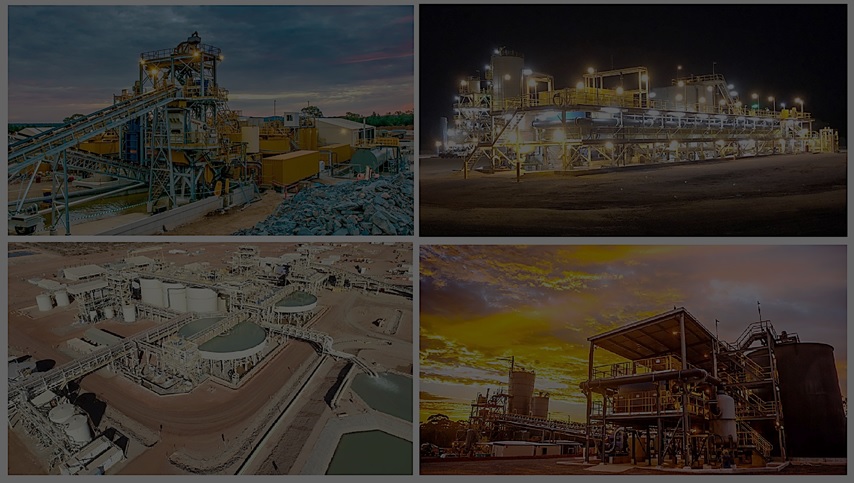
Corrosion and Wear in Mineral Processing Equipment: A Practical Material Selection Guide for Stainless Steel and Carbon Steel in Aggressive Slurries
Corrosion and Wear in Mineral Processing Equipment: A Practical Material Selection Guide for Stainless Steel and Carbon Steel in Aggressive Slurries
Abstract
Context: The premature failure of mineral processing equipment due to combined corrosion and abrasion in aggressive slurries is a primary driver of unplanned downtime, maintenance costs, and production losses in the mining industry. The material selection dilemma between various grades of stainless steel and carbon steel persists across engineering teams. Objective: This paper provides a systematic, application-driven material selection guide for agitated tanks, piping, and heat exchangers exposed to acidic, chloride-rich, and high-solid-content slurries in gold and copper hydrometallurgy. Approach: A comprehensive review of failure mechanisms (erosion-corrosion, pitting, crevice corrosion, and stress corrosion cracking) is integrated with industrial case studies from operating plants. A comparative techno-economic analysis is performed for 316L stainless steel, duplex stainless steel, and coated carbon steel. Results: The analysis reveals that while 316L offers superior resistance in chloride-free sulfate media, its vulnerability to pitting in chloride-rich gold circuits makes duplex grades or rubber-lined carbon steel more cost-effective long-term solutions. A decision flowchart and a material selection matrix based on slurry chemistry and solids loading are presented. Conclusion: Optimal material selection is not a static choice but a dynamic balance between capital expenditure (CAPEX), operational expenditure (OPEX), and process chemistry. This guide empowers plant operators and EPC contractors to make data-driven decisions that maximize equipment lifecycle and plant availability.
Keywords: Corrosion, Abrasion, Stainless Steel, Carbon Steel, Material Selection, Slurry, Mineral Processing, Hydrometallurgy, EPC, Lifecycle Cost.
1. Introduction
Mineral processing plants operate in an environment that is relentlessly hostile to construction materials. The simultaneous presence of corrosive chemical agents—such as sulfuric acid in copper leaching or cyanide in gold circuits—and highly abrasive solid particles creates a synergistic degradation mechanism that conventional material selection approaches often fail to address adequately. The annual cost of corrosion in the global mining industry is estimated at billions of dollars, a significant fraction of which is attributed to incorrect material choices during the engineering, procurement, and construction (EPC) phase [1].
The classic dilemma faced by project engineers and plant operators is the choice between austenitic stainless steels (e.g., AISI 316L), higher-alloy duplex grades, and carbon steel with protective coatings or linings. Each option presents a unique trade-off between initial cost, fabrication complexity, corrosion resistance, and abrasion tolerance. A decision made solely on upfront capital expenditure (CAPEX) can lead to catastrophic operational expenditure (OPEX) overruns due to frequent replacements, unplanned shutdowns, and lost production hours.
This paper is written not as a purely academic review but as a practical, business-oriented engineering guide. It is intended for plant managers, maintenance engineers, and EPC contractors who require clear, actionable criteria for material selection. The core objective is to bridge the gap between theoretical corrosion science and on-the-ground equipment performance in two of the most demanding hydrometallurgical processes: gold cyanidation and copper leaching. By integrating documented failure mechanisms with industrial observations, this work provides a structured decision-making framework [2].
The scope encompasses the three major categories of custom-built equipment central to leaching and solvent extraction plants: agitated reaction tanks, interconnecting slurry piping, and shell-and-tube heat exchangers. For each, the specific degradation risks are analyzed, and a comparative evaluation of material candidates is conducted.
2. The Degradation Trilemma: Corrosion, Abrasion, and Synergy
Understanding material degradation in mineral slurries requires moving beyond isolated corrosion or wear testing. The phenomenon of erosion-corrosion synergy is responsible for the majority of premature failures in agitated and high-flow systems [3].
2.1 Pure Corrosion Mechanisms in Gold and Copper Circuits
Corrosion in hydrometallurgy is primarily electrochemical. The aggressiveness of the environment is defined by pH, chloride ion concentration ([Cl⁻]), temperature, and the presence of oxidizing agents [4].
- Copper Leaching Circuits (Sulfuric Acid Environment): The majority of copper oxide and secondary sulfide leaching is performed in dilute sulfuric acid (pH 1.5–2.5). In this environment, the general corrosion rate of unprotected carbon steel is unacceptably high. Austenitic stainless steels like 316L form a passive chromium oxide (Cr₂O₃) layer that provides excellent protection in pure sulfate solutions. However, industrial leaching solutions are rarely pure; the presence of residual chlorides from process water can induce localized pitting corrosion, a dangerous and difficult-to-predict failure mode [5].
- Gold Cyanidation Circuits (Alkaline Cyanide Environment): Gold leaching occurs at high pH (10–11) in the presence of sodium cyanide and dissolved oxygen. While alkaline solutions are generally less aggressive to carbon steel than acids, the presence of cyanide complexes and, critically, chlorides from saline groundwater or seawater usage introduces a high risk of Stress Corrosion Cracking (SCC) in susceptible stainless steels. Furthermore, the dissolution of iron sulfides in the feed can generate thiosulfate and polythionate species, which are aggressive pitting agents [2].
2.2 Pure Abrasion and Erosion
Abrasive wear in slurry systems is a mechanical process driven by the impact and sliding of hard mineral particles against the equipment surface. The severity depends on particle angularity, hardness relative to the metal surface, slurry velocity, and solid concentration [3].
- Low-Stress Abrasion: Occurs in low-velocity zones like tank walls, where particles slide and roll. This mechanism gradually thins the material.
- High-Stress Erosion: Occurs at agitator impeller blades and pipe elbows, where high-velocity particle impact causes localized micro-cutting and plastic deformation.
Carbon steel, while susceptible to corrosion, offers moderate resistance to pure abrasion, especially in high-hardness variants. However, its performance degrades rapidly when corrosion softens the surface layer, making it more vulnerable to mechanical removal.
2.3 The Synergistic Effect: Why Total Failure Rates Multiply
The true challenge is the synergy. The passive protective film on stainless steel (Cr₂O₃) is only nanometers thick [5]. The continuous impact of slurry particles can mechanically remove this film (depassivation). In a corrosive fluid, the bare metal surface corrodes rapidly before the film can reform. This cycle—film removal, accelerated corrosion, re-passivation—leads to material loss rates far exceeding the sum of pure corrosion and pure abrasion. This synergy is the key engineering rationale for selecting duplex grades or protective linings in severe service conditions [4].
3. Material Candidates: Properties and Cost Profiles
The three primary material families for mineral processing equipment are evaluated below. Table 1 provides a comparative summary.
3.1 AISI 316L Stainless Steel
The workhorse of the hydrometallurgical industry. Its 2-3% molybdenum content provides superior pitting resistance compared to 304 grades in sulfate media [6].
- Advantages: Excellent general corrosion resistance in non-chloride acids; good weldability and formability; widely available; passive self-healing surface.
- Limitations: Susceptible to pitting and crevice corrosion when chloride levels exceed approximately 500–1000 ppm, especially at elevated temperatures. Susceptible to Stress Corrosion Cracking (SCC) in hot chloride environments. Hardness is relatively low (Rockwell B ~80), providing limited resistance to high-stress abrasion from sharp silica particles.
3.2 Duplex Stainless Steels (e.g., UNS S32205)
These alloys possess a mixed austenitic-ferritic microstructure, offering a combination of high strength and superior corrosion resistance [6].
- Advantages: Yield strength is approximately double that of 316L, allowing for thinner, lighter designs or greater inherent abrasion resistance. Pitting Resistance Equivalent Number (PREN) is significantly higher than 316L (typically >34 vs. ~25), providing excellent protection against chlorides. Superior resistance to SCC.
- Limitations: Higher material cost (1.5–2 times 316L). More complex welding and fabrication procedures are required, which can increase manufacturing costs. Maximum service temperature is limited to approximately 300°C due to embrittlement concerns.
3.3 Carbon Steel with Protective Systems (Rubber Lining, Epoxy Coating)
A cost-effective strategy that combines the mechanical strength and low cost of carbon steel with the chemical inertness of a non-metallic barrier [7].
- Advantages: Lowest base material cost. A high-quality natural or chlorobutyl rubber lining provides near-absolute resistance to acids and moderate abrasion. Damaged linings can be locally repaired.
- Limitations: Performance is entirely dependent on the integrity of the lining. A single pinhole or debonding exposes the carbon steel substrate to rapid under-lining corrosion. Vulnerable to mechanical damage during maintenance. Temperature limitations of the polymer matrix (typically < 80–90°C for rubber).
Table 1. Comparative Material Profile for Mineral Slurry Equipment
(Values are industry-representative baselines from NACE and manufacturer datasheets.)
| Parameter | 316L SS | Duplex SS (2205) | Rubber-Lined CS | Epoxy-Coated CS |
|---|---|---|---|---|
| Indexed Base Material Cost | 100 | 160 | 45 | 40 |
| Relative Abrasion Resistance | Low | Medium-High | High (Natural Rubber) | Medium |
| Chloride Pitting Resistance | Moderate (PREN ~25) | High (PREN ~34) | Immune (if intact) | Immune (if intact) |
| SCC Resistance | Low | High | N/A | N/A |
| Weldability & Fabrication | Excellent | Good (Controlled) | Standard (Post-lining) | Standard |
| Typical Service Life (Leach Tank) | 5-10 years | 10-20+ years | 10-15 years | 3-5 years |
4. Application-Driven Selection: An Equipment-Centric Guide
Material selection should be driven by the specific component’s operating context. A universal material for an entire plant is rarely economically optimal.
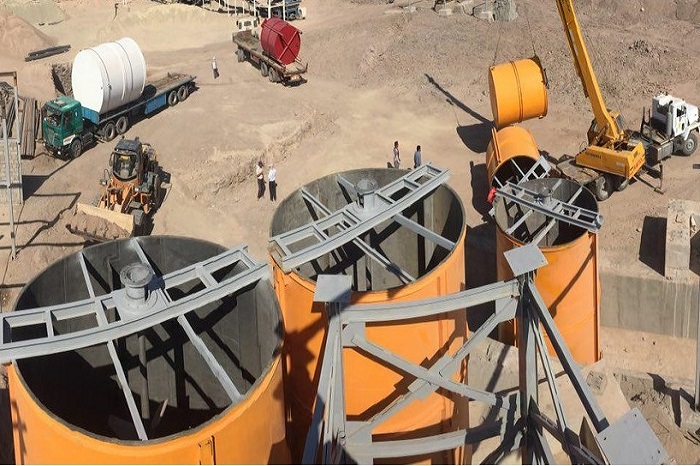
4.1 Agitated Leach Tanks and Reactors
The tank shell and the agitator impeller experience fundamentally different conditions.
- Tank Shells (Low Velocity, Constant Immersion):
- Copper Sulfate Leaching: 316L stainless steel is the industry standard. If process water chlorides exceed 1000 ppm, duplex stainless steel (2205) is recommended.
- Gold Alkaline Cyanidation: Rubber-lined carbon steel is a highly effective solution, provided the rubber compound is compatible with cyanide.
- Agitator Impellers and Shafts (High Velocity, High Shear):
- Fine, Soft Solids: 316L impellers can provide acceptable service life.
- Coarse, Hard Solids (e.g., silica in gold ore): Duplex SS 2205 with optional hard-facing is recommended.
4.2 Slurry Piping and Valves
- Straight Runs: Rubber-lined carbon steel is the benchmark. The lining must extend through flanges.
- Bends and Tees: Duplex stainless steel or induction-hardened high-chrome white iron components are justified.
4.3 Heat Exchangers
- Copper SX: Duplex stainless steel is increasingly specified for tube bundles.
- Gold Slurry Heat Exchangers: Floating head or U-tube design in duplex stainless steel is recommended.
5. Decision Matrix and Lifecycle Cost Logic
An engineering decision based purely on CAPEX is incomplete and misleading. A simple Lifecycle Cost (LCC) model demonstrates the economic logic:
LCC = Initial Material Cost + Fabrication Cost + Installation Cost + Σ (Maintenance Cost_i + Downtime Cost_i) + Replacement Cost
Hypothetical Case: A Copper Leach Tank Agitator Impeller
- Option A: Fabricated 316L Impeller — Indexed Installed Cost: 100 — Expected Service Life: 5 years.
- Option B: Solid Duplex 2205 Impeller — Indexed Installed Cost: 160 — Expected Service Life: 15+ years.
Over a 15-year plant lifecycle, Option A requires two replacements. The 15-year cumulative cost of Option A typically exceeds Option B by a factor of 2.0 to 2.5. The conclusion is unequivocal: for critical rotating equipment in continuous operations, the higher-grade material is the financially conservative business choice.
Figure 1: Material Selection Flowchart for Slurry Equipment
or pH < 2 ?
(Opt. Hardfacing)
(Lining QA/QC)
(Monitor Erosion)
(Standard Design)
Final Selection
Review Options
Figure 1. Algorithm for material selection based on slurry chemistry, mechanical stress, and LCC analysis.
6. Conclusion
The selection of materials for mineral processing equipment is a core competence of any successful EPC contractor and an essential knowledge area for plant operators. This guide has demonstrated that a static, one-material-fits-all philosophy is a driver of financial loss through unplanned downtime and premature asset failure.
The key takeaways for a business and engineering audience are:
- Acknowledge Synergy: Material degradation is dominated by the corrosion-abrasion synergy.
- Differentiate by Application: Tank shells, impellers, pipes, and heat exchangers each require a tailored material strategy.
- Rubber-Lined Carbon Steel is a Valid, High-Performance Choice for large, low-velocity vessels.
- Duplex Stainless Steels are an Investment, Not a Cost. The 1.6x CAPEX premium is offset by 3x service life extension.
- Lifecycle Cost Must Drive the Decision. Procurement strategies based on lowest bidder alone are misaligned with operational excellence.
This guide provides a practical framework. The ultimate material choice must be validated against the specific mineralogy and water chemistry of each project. This validation, combined with experienced fabrication quality, is what transforms a standard processing plant into an operationally excellent, low-cost producer.
7. References
- Roberge, P. R. (2008). Corrosion Engineering: Principles and Practice. McGraw-Hill Education.
- NACE International. (2013). NACE MR0175/ISO 15156: Petroleum and Natural Gas Industries—Materials for Use in H₂S-Containing Environments.
- Tylczak, J. H., & Crook, P. (1999). Erosion-Corrosion of Metals and Alloys. In ASM Handbook, Volume 13A: Corrosion: Fundamentals, Testing, and Protection (pp. 341–351). ASM International.
- Fontana, M. G. (2005). Corrosion Engineering (3rd ed.). Tata McGraw-Hill Education.
- Davis, J. R. (Ed.). (2000). Corrosion: Understanding the Basics. ASM International.
- Outokumpu Oyj. (2021). Handbook of Stainless Steel. Outokumpu.
- Schweitzer, P. A. (2006). Corrosion of Linings and Coatings: Cathodic and Inhibitor Protection and Corrosion Monitoring. CRC Press.
Research Highlights
- Guide for Industry Professionals: A practical, non-theoretical material selection decision matrix for gold and copper hydrometallurgy.
- Addresses Core Business Pain: Connects material science directly to plant downtime, maintenance costs, and lifecycle economics (CAPEX vs. OPEX).
- Equipment-Specific Analysis: Differentiated recommendations for tanks, agitators, piping, and heat exchangers—not a generic material datasheet.
- Synergy of Degradation: Clearly explains the erosion-corrosion synergy, the primary mechanism behind premature equipment failure.
- Actionable Outputs: Includes comparative cost and performance logic leading to clear, justifiable engineering choices.

پست های مرتبط
مرور نظاممند چالشهای فنی و عملیاتی خطوط فرآوری مواد معدنی در ایران
علت کاهش عیار کنسانتره در فلوتاسیون مس + ۱۰ راهکار عملی
Fault Diagnosis of Flotation Cells Using Vibration and Temperature Analysis
راهنمای انتخاب پمپ پالپ برای کارخانههای فرآوری
مدیریت پایدار باطلههای فلوتاسیون؛ از چالشهای زیستمحیطی تا فناوریهای نوین
خط فرآوری پس از فلوتاسیون؛ از آبگیری تا تولید فلز نهایی
راهنمای انتخاب سلول فلوتاسیون؛ ۹ عامل کلیدی که قبل از سفارش باید بدانید
مقایسه جامع انواع سلولهای فلوتاسیون (مکانیکی، ستونی، RCS، جیمسون و فلوتاشن)
هزینههای پنهان در احداث کارخانه فرآوری: از تشریفات گمرکی تا خواب سرمایه
عیبیابی ۷ مشکل رایج در سلول فلوتاسیون و راهکارهای عملی
مرزهای شیمی لیچینگ: تحلیل موفقیتها و شکستهای لیچینگ با آمونیاک و تیوسولفات
جعبه ابزار صنعتی: تحلیل تطبیقی فناوریهای POX، BIOX و Albion برای فرآوری کانسنگهای مقاوم طلا
چرا استخراج طلا پیچیدهتر از همیشه شده است؟ تحلیل ژئومتالورژیکی کانسنگهای مقاوم و موانع فرآوری
راهنمای جامع حداکثر بهرهوری در فلوتاسیون طلا و مس: از تئوری تا عمل در کارخانههای ایران
فرمول ۶ بخشی ارزشگذاری معدن: چطور معدنی بخریم که از تله بدهی، معارض محلی و عوارض صادراتی در امان باشیم؟
راهنمای جامع تولید مس: نگاهی گامبهگام به فرآیند استخراج، فرآوری و برآورد شاخصهای اقتصادی
سیلیکاژل در فرآیندهای فیلتراسیون صنعتی: مکانیسم تشکیل، روشهای پیشگیری و تکنیکهای رفع گرفتگی فیلترها
رازهای یک فلوتاسیون بینقص: همه چیز درون سلول اتفاق میافتد!
مشکل تهنشینی در تانکهای لیچینگ، ناکارآمدی همزنها و راهکارهای عملی بهبود عملکرد
۳ دلیل اصلی گرفتگی و پارگی کیسههای بگ فیلتر در معادن ایران + نقشه عملی عیبیابی
Azərbaycanın Dağ-Mədən Sənayesi üçün Yüksək Texnologiyalı Emal Həlləri: Taşko Mühəndislik Qrupunun Gücü
بگ فیلتر در کارخانههای فرآوری معادن: کنترل غبار، سود پنهان و حفظ محیط زیست
محاسبات کاربردی در راهاندازی خط فرآوری معادن فلزات: راهنمای جامع از طراحی تا بهرهبرداری
طراحی و ساخت تجهیزات فلوتاسیون، آبگیری و جداسازی طلا و مس | راهنمای جامع + مشخصات فنی و عوامل موثر بر هزینه
Ներդրումներ Հայաստանի Հանքարդյունաբերության Ոլորտում
تجهيزات كاملة لمعامل ومصانع العراق – من الهيدروسيکلون للكورة الدوارة وكل شي بينهم
۱۰ حقیقت شگفتانگیز درباره فرآوری طلا که تاکنون نمیدانستید
۷ مشکل رایج در مدارهای فلوتاسیون و روشهای عیبیابی آنها
انقلاب در لیچینگ مس اکسیدی: از فناوریهای نوین لیچینگ تا طراحی نسل آینده راکتورهای همزن (Stirred Tank Reactors)
هیدروسیکلون چیست؟ صفر تا صد طراحی، جنس، کاربرد و اشتباهات رایج در فرآوری مواد معدنی
راهنمای کامل طراحی و انتخاب سیستم انتقال مواد (Material Handling) در کارخانه فرآوری
راهاندازی خط فرآوری فلزات: از ایده تا تولید
تجهیزات ضروری برای احداث خط فرآوری طلا با نگاه بومی سازی
مقایسه سلولهای فلوتاسیون Sala و RCS در صنعت فرآوری مواد معدنی
ارزیابی ۴ فاکتور کلیدی در طراحی تجهیزات فرآوری برای افزایش بازدهی کارخانه
تأثیر فناوریهای نوین لیچینگ و فلوتاسیون بر طراحی نسل آینده راکتورها و سلولها
مهندسی و ساخت تجهیزات تحت فشار در صنایع معدنی: چالشها، استانداردها و فناوریهای نوین